


American Wonders
Courtesy Arkansas Dept. of Parks, Heritage and Tourism
Impressive landscapes, diverse vegetation, spectacular views — there’s so much natural beauty to discover. From soaring geological formations and trees to thundering waterfalls and underground labyrinths, these natural wonders in America will inspire groups to explore and learn.
Devils Tower National Monument
Devils Tower, Wyoming
Rising 867 feet from the prairie landscape surrounding northeastern Wyoming’s Black Hills, Devils Tower is a remarkable geologic formation and sacred site for Northern Plains Indians, who have lived here for thousands of years. The site was proclaimed the first national monument by President Theodore Roosevelt in 1906.
“It’s an iconic landmark with a unique rock formation made of igneous rock; it’s very rare to see this type of structure,” said Hailey Stevens, public relations manager for the Wyoming Office of Tourism. “This is a place to reconnect with the outdoors, explore the beautiful landscape and take in the 360-degree views.”
The tower’s summit is the size of a football field, and because visitors can only see one side at a time, groups can enjoy various vistas throughout the site, each with its own rugged beauty, Stevens said. On-site staff can direct groups to the best hiking or wildlife-spotting areas.
“One popular one is the Tower Trail, which is under half a mile long,” she said. “A portion is paved and ADA accessible. As you’re hiking, you’ll notice colorful prayer cloths that Indigenous tribe members have tied to tree branches to represent their spiritual connection to Devils Tower.”
Hundreds of parallel cracks on the tower make it one of the finest climbing areas in North America, Stevens added.
“Devils Tower climbing guides take groups, whether you want to go up just a few feet or climb all of the way to the top,” she said.
Picnic tables are available, or groups can eat at The Diamond Bar at Devils Tower or Devils Tower View Cafe. Nearby lodging options include Devils Tower Lodge and Best Western Devils Tower Inn.
To celebrate the tower’s 120th anniversary as the first U.S. national monument, special events will take place throughout the year.
Crater of Diamonds State Park
Murfreesboro, Arkansas
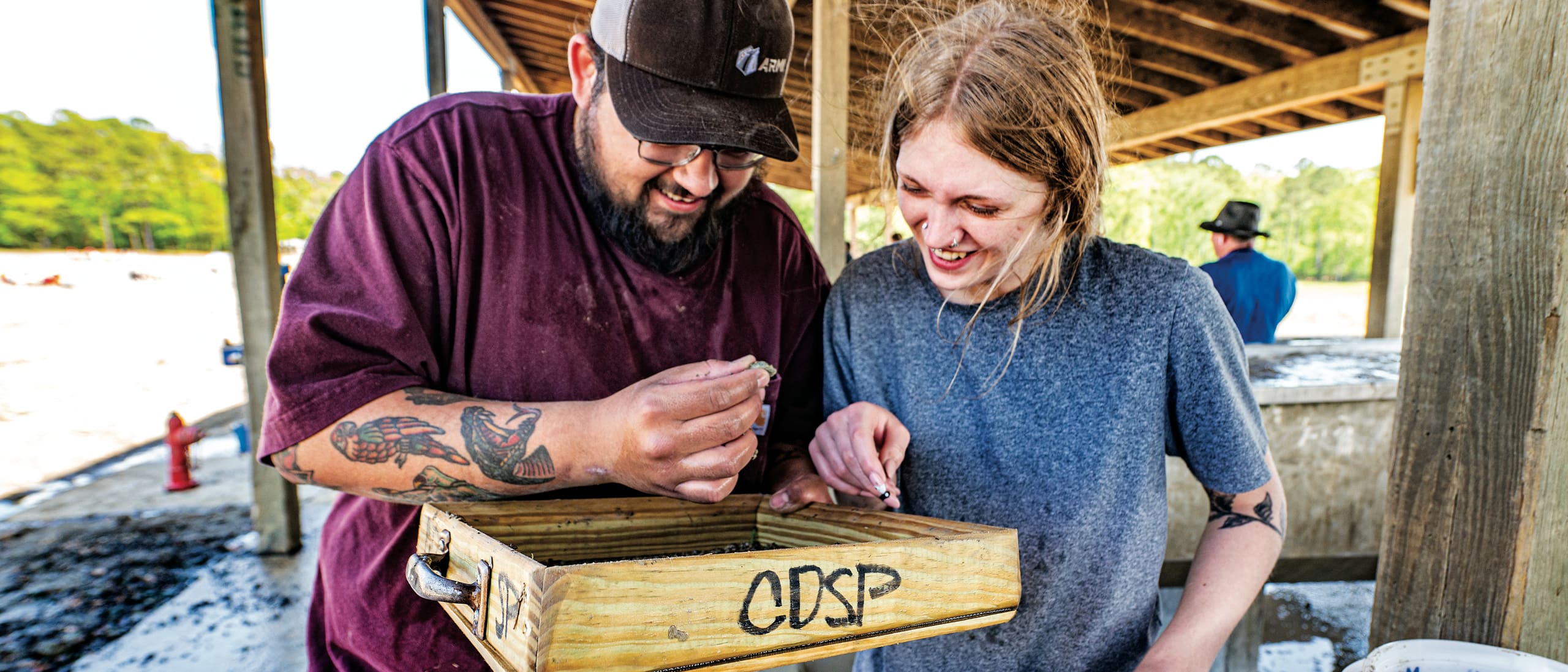
Visitors from around the world flock to the 911-acre Crater of Diamonds State Park in Murfreesboro, Arkansas, with one hope: finding a diamond in the rough.
“There’s nowhere else in the world where you can find a diamond in its original volcanic soil,” said park superintendent Caleb Howell, noting that anyone can dig around the park’s 37.5-acre plowed field, the eroded surface of a volcanic crater.
“People come for the unique adventure of finding a diamond, but not everybody finds one,” he added. “We’re averaging 160,000 visitors to the park per year and around 500 to 600 diamonds per year. Whatever rock or mineral you find, you can keep.”
Since Crater of Diamonds became a state park in 1972, more than 37,500 diamonds have been unearthed, including the 40.23-carat Uncle Sam — the largest ever found in the U.S.
Groups can bring their own mining equipment or rent tools from the park, Howell said. Guests can view uncut gems and historical exhibits at the visitor center and learn about surface searching, dry sifting and wet sifting techniques at the Diamond Discovery Center. People find semiprecious stones and minerals, including garnet, quartz, amethyst and jasper, Howell said. Park staff can help identify them.
“Our group pavilion is heated and cooled,” he said. “You can have meetings or lunch if you want a break from diamond searching.”
Groups can also enjoy walking trails and Diamond Springs Water Park, where groups of 15 or more receive half off the admission price.
Niagara Falls
Niagara Falls, Ontario, and New York
Groups get a two-for-one journey at Niagara Falls, the most powerful waterfall in North America, with different experiences on the Canadian and American sides, said Adam Stiles, interim president and CEO of Niagara Falls Tourism. Three border crossings to the region make it easy for groups to discover both sides of the 13-story waterfall.
On the U.S. side, Stiles suggested groups board Maid of the Mist, sailing to the base of the American and Horseshoe Falls to witness 600,000 gallons of water per second crashing down.
“Niagara Falls State Park was voted one of the top ones in the U.S., and Cave of the Wind is a hike down along the side of the gorge to get wet and windy and walk through some caves,” he said.

On the Canadian side, Niagara City Cruises is similar to Maid of the Mist. Groups can also stroll the White Water Walk on the edge of Niagara River; check out Journey Behind the Falls, descending 125 feet by elevator to tunnels leading to observation decks directly behind the waterfalls; or ride to the top of the Skylon Tower for a panoramic view. At night, the falls are illuminated for a spectacular show.
“The Niagara Parks Commission has done a fantastic job investing in attractions,” Stiles said. “A decommissioned power plant built in 1904 is now a visitor attraction; you can go down 180 feet in a glass elevator to the outflow tunnel where the water used to go back into the Niagara River after it made the drop. It’s a stunning view of the falls, from the platform right to the base. And a new flying theater attraction, Niagara Takes Flight, opened last August.”
With so much to do, Stiles recommended groups plan for a two- or three-night itinerary.
Redwood Forests
Humboldt County, California
Famous for the world’s tallest trees, Redwood National and State Parks enable visitors to marvel at ancient forest ecosystems that span diverse landscapes in northern California, from rugged coastlines and crystal-clear rivers to open prairies and oak woodlands. In the redwood forests, groups can hike or bike through the majestic trees — some soaring over 350 feet high — engage in forest bathing or take part in free ranger-led programs at one of the five visitor centers, said Patrick Taylor, interpretation and education program manager.
“We also have coastlines, wildlife and historic sites,” Taylor said, noting the north and south ends of the park have the most room for bus parking.
Taylor recommends two days to make the most of a group visit.
“Most people pre-identify one or two forest walks they want to do, but then they learn about the coastline or the higher hill areas or some of the historic sites and wish they had a day for the Smith River, a coast walk or tide pooling,” he said.
Taylor noted there are nearby hotels and motels that welcome groups. Half the trailheads and scenic viewpoints have picnic tables, or groups can eat along the coastline.
Taylor’s favorite spot is Stout Grove, the first old-growth redwood forest he ever visited.
“It’s magical,” he said. “There’s just a sense of awe, inspiration and reverence you feel for nature when you walk into that grove. Even little children and teenagers marvel at the glory around them.”
Mammoth Cave National Park
Mammoth Cave, Kentucky
Located in south-central Kentucky, about 90 miles south of Louisville and the same distance north of Nashville, Mammoth Cave National Park is a UNESCO World Heritage Site and Biosphere Reserve. One of the oldest tourist attractions in North America, the park’s history stretches back thousands of years. The site offers activities for groups, including ranger-led programs, hiking, horseback riding, fishing and canoeing, said spokesperson Jessica Cooper.
“Mammoth Cave National Park is unique because we have an extraordinary combination of natural wonders and adventure, both above and below ground, the most famous of which is the world’s longest cave system — it’s over 426 miles,” Cooper said. “Visitors can explore the geological and human history of the region but also enjoy almost 53,000 acres of hardwood forests, riverways and hiking trails.”
Cooper recommended groups book one of the many cave tours offered on-site.
“We have varying lengths and difficulties, from long ones like our Grand Avenue or Violet City Lantern walking tours, which can fill almost an entire day, or the shorter Frozen Niagara or historic tours, which take from an hour and 15 minutes to a couple of hours,” she said. “We also have Beneath Your Feet, a self-guided walk across the park’s surface.”
Groups can see a variety of wildlife, including white-tailed deer, wild turkeys, turtles, frogs and birds. Picnic areas and covered shelters are also scattered throughout the park.
“Sloan’s Pond has a great boardwalk trail around a Kentucky wetland habitat, and it’s wheelchair accessible,” Cooper said. “Groups can also get meals at our in-park concession and The Lodge at Mammoth Cave without having to leave the park.”


Wendy Helfenbaum
Wendy Helfenbaum is an award-winning Montreal journalist and avid traveler who writes about travel and lifestyle for dozens of publications across North America. She’s a carry-on only gal for any length of trip, and will road trip anywhere to catch Bruce Springsteen live.
You May Also Like



About Us

We're Going On Faith, America's leading experts on faith-based group travel. Find free resources for building a thriving church travel program here.
The Latest Issue
Stay Connected!
Get the Faith Travel Minute e-newsletter delivered every month.