

Oklahoma City, Transformed
By Tom Adkinson
“Just OK” describes Oklahoma City as it was 35 years ago. While trying to diversify its economy, the city got a kick in the teeth when a major prospective employer bypassed Oklahoma’s capital because, well, “just OK” wasn’t good enough.
The reaction? City leadership and its citizens became mapmakers. Actually, they became MAPS makers and launched the Metropolitan Area Projects Plan. Residents agreed to a multiyear sales tax that accumulated money for massive capital improvements, all built with cash.
Among the early additions: Chickasaw Bricktown Ballpark, a downtown minor league baseball stadium; the transformation of a rundown warehouse area into Bricktown, an entertainment and dining district complete with the Bricktown Canal that carries excursion boats (think San Antonio’s Riverwalk); and the development of the Boathouse District, which is a total remaking of the Oklahoma River into a kayaking, rafting and even surfing destination in the middle of the continent. The revamped riverfront is challenging enough to attract Olympic competition in 2028.
Oklahoma City is now working on its fourth MAPS program, and while most MAPS money goes to quality-of-life purposes, such as education and transportation, capital projects keep coming, including a professional soccer stadium due in 2028. Resultant private sector development means the city continues enhancing its appeal to residents and visitors alike.
“Oklahoma City has become culturally transformed over the last 30 years or so,” said Matt Payne, a multiple Emmy-winning storyteller and entrepreneur who played a role in enhancing one of the city’s bedrock attractions, the National Cowboy & Western Heritage Museum. “It will surprise you.”
Highlighting Heritage
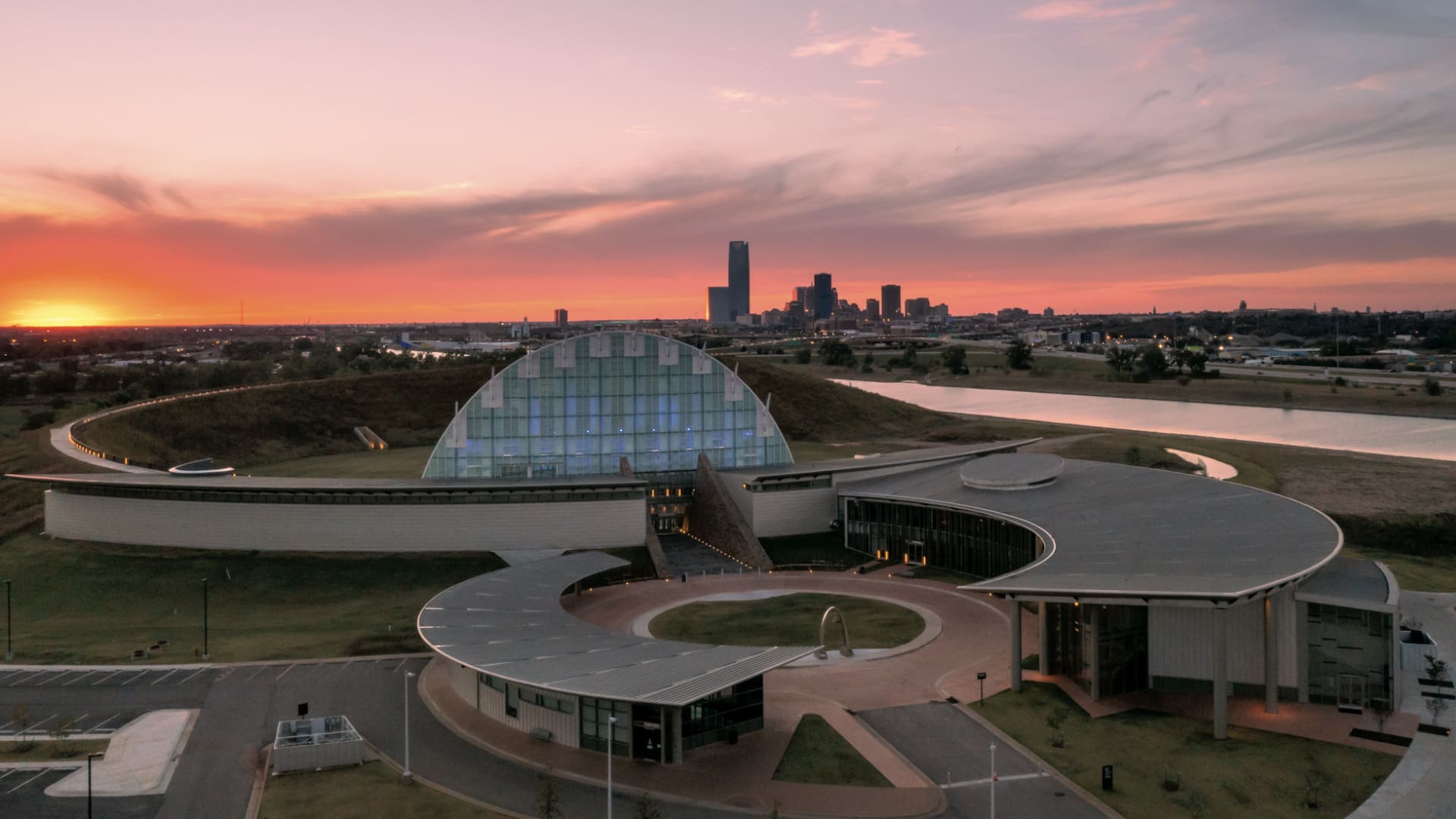
Thirty-nine Native American tribes are in Oklahoma, most not of their own choice. The First Americans Museum celebrates their cultures and histories on an impressive campus featuring a 175,000-square-foot, symbol-laden museum. Its semidome core area takes its inspiration from the grasshouse architecture of the area’s original Wichita tribe, and its 10 stone columns represent the distance traveled each day when tribes were forcibly removed to Indian Territory. A semicircular earthen mound rises behind the museum, and guided walks explain the Mound Builder civilizations that thrived in North America centuries before Europeans arrived.
The museum’s 39 Restaurant delivers a memorable group dining experience. The menu features selections from across the continent, such as green chile and sweet corn hummus, bison burgers, braised rabbit, Kickapoo venison chili, and acorn squash stuffed with smoked turkey.
The Cowboy Way
Cowboys — the icons of the American West — are the focus of the National Cowboy & Western Heritage Museum, where modern technology pulls visitors directly into life on the trail. “The Cowboy: An Immersive Journey” is a new experience by the creators of “Immersive Van Gogh” and “Immersive Disney Animation.” Visitors find themselves on the Great Plains, in the Rocky Mountains and on a cattle drive. A real cowboy’s trail journal from the late 1800s is the basis of the tale, which actor Tom Selleck narrates. Filmmaker Matt Payne was part of the project.
Modern technology aside, the museum showcases an extensive collection of classic and modern Western art. The museum features works by Frederic Remington and Charles Russell, and groups will find multiple galleries devoted to rodeos, Native American culture, firearms, the frontier military, and entertainers from movies, television and Wild West shows.
New in 2026 is a sculpture ready-made for a group’s OKC souvenir photo. Kicks 66 is a 35-foot-tall red cowboy boot created to honor the centennial of Route 66, which runs through Oklahoma City for 51.5 miles.

Places of Reflection
Two somber locations warrant consideration. One is the Oklahoma City National Memorial & Museum, a special place to reflect on the largest act of domestic terrorism in U.S. history: the 1995 bombing of the Alfred P. Murrah Federal Building that killed 168 people.
Oklahoma actress and singer Kristin Chenoweth narrates the museum’s opening video and recalls the “brutal, shocking, unprecedented attack” in which “we lost our innocence, but not our character” and came out of it with the intent to “revive, rebuild, restore.” For an unforgettable visit, book a “First Person: Stories of Hope” group tour. First Person speakers include bombing survivors, families, first responders, journalists, judges, FBI agents and others.
The second place of reflection is the Blessed Stanley Rother Shrine that tells the story of Rev. Stanley Francis Rother, a Catholic missionary murdered in 1981 in rural Guatemala during a civil war. In 2016, Pope Francis recognized him as a martyr for the faith, making him the first martyr from the U.S. and the first U.S.-born priest to be beatified, the final stage before canonization as a saint.
Explore Bricktown
OKC’s Bricktown District proves how imagination, money and an entrepreneurial spirit can transform aging warehouses into a buzzing center for sports, entertainment and unexpected attractions such as a banjo museum. The Chickasaw Bricktown Ballpark, home of the AAA OKC Comets, and the Bricktown Canal were two early catalyst projects. Excursion boats, piloted by story-filled narrators, glide past the old warehouses that now house OKC’s first craft brewery, more than 45 restaurants, retail shops and amusement attractions such as Brickopolis, a three-story playground with miniature golf, arcade games and laser tag. A quiet stretch of the canal passes where sculptor Paul Moore placed 45 larger-than-life bronze horses, wagons and pioneers to capture the tumult of Oklahoma’s 1889 land rush.
The American Banjo Museum is a treat with its collection of more than 400 instruments. Grandpa Jones, Steve Martin and even Dolly Parton get their due at the museum. Groups can book lunch and a banjo performance to spice up an itinerary.
Let’s Go Surfing
Oklahoma City might be the last place anyone would expect to go surfing, kayaking or whitewater rafting, but modern engineering and a MAPS project make those activities possible in the Oklahoma flatlands.
Groups can get in on the action at Riversport, the transformation of the Oklahoma River into frothy Class II-IV rapids for kayaking, rafting and even tubing. Activities are group-friendly and accessible to visitors of all skill levels, including no skills at all. Even surfing instruction is available.
A terraced pavilion that will hold thousands of spectators is in the works for the 2028 Olympic Games. Most of those Olympics will be held in Los Angeles, but OKC will host the canoe slalom events as well as women’s softball. In the meantime, visitors can watch Olympic hopefuls train at Riversport.


Tom Adkinson
Nashvillian Tom Adkinson continues his multi-decade career in travel journalism and travel publicity as an independent writer with time to roam. He particularly enjoys researching stories that include history, interesting personalities and the outdoors, especially destinations where trout hang out. He is a Marco Polo member of the Society of American Travel Writers.
You May Also Like

About Us

We're Going On Faith, America's leading experts on faith-based group travel. Find free resources for building a thriving church travel program here.
The Latest Issue
Stay Connected!
Get the Faith Travel Minute e-newsletter delivered every month.