


Peru Elevates Group Experiences
Courtesy Promperú
For travelers willing to voyage from sea to sky, from desert coast to nearly 12,000 feet high into the Andes, Peru offers endless rewards.

There are grand colonial churches built atop ancient temples, a physical reminder of both the Inca — at its peak, the world’s largest empire at the time — and the Spaniards who conquered and colonized that spectacular civilization. There’s the cloud forest marvel of Machu Picchu, one of the new Seven Wonders of the World and a UNESCO World Heritage Site. Visitors will also find pilgrimage sites associated with the continent’s three most venerated Catholic saints, unparalleled photo opportunities and delicious fusion cuisine.
Although it does require planning for altitude, Peru is built for slow exploration and is sure to provide timeless memories.
Essential Destinations
Lima
Once known as the City of Kings, Peru’s capital was founded in 1535. It serves as an arrival and departure point for most of the country’s tour itineraries and is ideal for exploring before visiting the mountain regions. Groups will find it easy to cover the Historic Centre of Lima, a UNESCO World Heritage site, on foot, admiring the Plaza Mayor, the Cathedral of Lima and colonial mansions with ornately carved wooden balconies. The city is one of South America’s top culinary destinations, and food-lovers will delight in the sparkling fresh seafood served at rustic “cevicherías” along the coast. The Magic Water Circuit at the Park of the Reserve offers a family-friendly fountain show that’s perfect for a relaxing evening before a flight to Cusco.
Cusco & the Sacred Valley
Once called “the center of the world” by the Inca, Cusco blends colonial Spanish architecture with the remains of the civilization it replaced. Qorikancha, the empire’s most sacred temple, was once lined with some 700 sheets of solid gold and filled with life-size gold and silver statues of animals and plants. The Spanish melted the gold into ingots and built the Convent of Santo Domingo over the temple’s remains. From Cusco, the Sacred Valley holds the terraced ruins at Pisac and Ollantaytambo. Travelers should take a day to adjust to the 11,200-foot altitude and build in free time before longer, more strenuous excursions. The valley’s market towns and textile coops provide an easy afternoon of souvenir shopping. Encounters with llama and alpaca are nearly guaranteed and make for memorable and amusing photos.
Machu Picchu
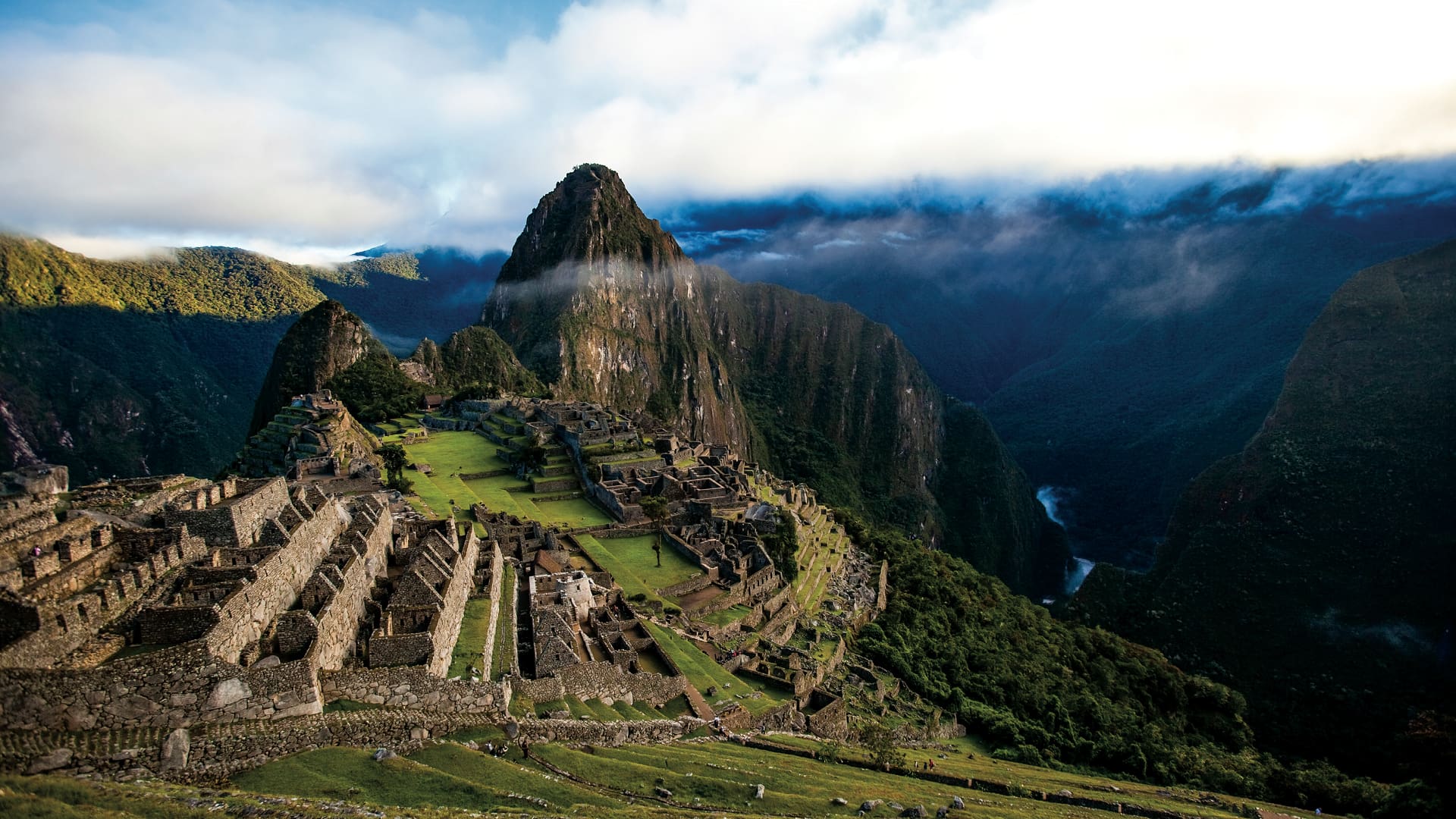
No Peruvian itinerary is complete without a visit to Machu Picchu, the 15th-century Inca citadel that remained hidden from the outside world until 1911. Most visitors arrive by train from Cusco or Ollantaytambo to Aguas Calientes and then make the final ascent by bus, although the adventurous and physically fit can reach the citadel by climbing steep stairs for about 90 minutes. The ruins sit at about 8,000 feet in elevation, which is less demanding for travelers who may be fatigued after the altitude of Cusco. The site served as a religious complex, astronomical observatory and royal retreat. The Temple of the Sun and the Room of the Three Windows are spectacular, and the latter offers a breathtaking view of the majestic Huayna Picchu and Putucusi mountains. Entry and train tickets to Machu Picchu sell out weeks or even months in advance, especially during the peak dry season that runs from May to October.


Faith Highlights
The Metropolitan Cathedral of Lima is found in the Plaza Mayor de Lima, the city’s main square. The church is open for tours, with highlights including several chapels, an art museum and the crypt of Francisco Pizarro, the Spanish conquistador who conquered the Incan Empire of Peru.
Historic Experience
Built in the 15th century, the fortress of Sacsayhuamán towers above Cusco and commands expansive views of the city. Commissioned by Pachacuti Inca Yupanqui, it’s composed of enormously heavy stones that were fitted together without the use of mortar. Remarkably, the fortress is largely undamaged by earthquakes that have rocked the site for five centuries.
Signature Flavor
When Japanese immigrants began arriving in Peru in 1899, they created Nikkei cuisine, an extraordinary fusion. Visitors will want a taste of “tiradito,” arguably Nikkei’s signature dish. A lighter cousin of ceviche, it’s composed of sashimi-style slices of raw fish that are dressed with a succulent citrus and “ají amarillo,” a hot yellow pepper sauce. Accompany the tiradito with a shot of “leche de tigre,” aka tiger’s milk, the citrus marinade traditionally sipped to begin the meal.
Just for Fun
Groups can change the pace and slip into high gear at the oasis of Huacachina, South America’s only naturally formed desert. Located outside Ica, it’s the place for dune buggy rides and sandboarding across the continent’s tallest dunes, which turn gloriously gold at sunset. Adventure tours run about two hours and mix high-speed buggy runs with sandboarding stops. The adventure is an ideal day trip from Lima or Paracas and is perfect for visitors who want a unique, adrenaline-charged experience. Many itineraries to Huacachina also include the Ballestas Islands, a wildlife haven of rocky beaches, cliffs and sea caves.


Cynthia Barnes
Cynthia Barnes is a Colorado-based travel writer who has written for the Boston Globe, Food & Wine, Toronto Star, and National Geographic, among other publications. She loves dives (both scuba and bars), baseball (Cubs), spicy food, and exploring the world.
You May Also Like


About Us

We're Going On Faith, America's leading experts on faith-based group travel. Find free resources for building a thriving church travel program here.
The Latest Issue
Stay Connected!
Get the Faith Travel Minute e-newsletter delivered every month.