

Viva la Cultura: Cities Hispanic Culture Stops
Courtesy Visit San Antonio
Hispanic heritage infuses the culinary, cultural and civic fabric of communities across the United States. For travel groups interested in learning about the histories, traditions and contributions of people from Spain, Mexico, Central and South America and the Caribbean, these five destinations stand out thanks to their significant Latino populations and intriguing local landmarks.

National Hispanic Cultural Center
Albuquerque, New Mexico
Fiestas abound in Albuquerque, where a series of special events highlight a blend of New Mexico’s Indigenous and Spanish Colonial heritage. The Open Space Visitor Center’s Annual Hispanic Heritage Celebration presents free performances, hands-on cultural activities, traditional crafts and local cuisine in a beautiful setting overlooking agricultural lands and the Sandia Mountains.
Fiesta Flamenca Burqueña brings acclaimed flamenco artists and community performances to the city. Brenna Moore, director of communications and public relations for Visit Albuquerque, suggested including a visit to venues like Tablao Flamenco or Casa Flamenca.
“Albuquerque is widely regarded as the flamenco capital of North America, and Tablao Flamenco Albuquerque offers an intimate way to experience this living cultural tradition,” she said.
The National Hispanic Cultural Center hosts the Albuquerque Folk Festival, which includes music, dance and workshops. The center’s signature fresco depicts 3,000 years of Hispanic history. It offers an events calendar with ongoing programming that complements the collection. Participation opportunities may be especially appealing for groups interested in cultural exchange.
Groups visiting in October can also enjoy Balloon Fiesta Week in Old Town, when the historic plaza hosts daily live music and cultural performances, including Ballet Folklórico, traditional Mexican folk dancing. That celebration coincides with the Albuquerque International Balloon Fiesta, the world’s largest hot-air balloon festival.

Freedom Tower
Miami, Florida
Cuban American community leaders in Miami preserved the Freedom Tower as a symbol of resilience and cultural diversity. Constructed in 1925, it was Miami’s largest skyscraper and originally served as the headquarters of The Miami Daily News. The tower is now a space for learning, creativity and community engagement on Miami Dade College’s Wolfson Campus.
“Throughout the space, nods to its origins as the home of the city’s newspaper are woven into the visitor experience, from interactive newspaper reels and broadsheet takeaways to oral histories and photographs that echo the voices of those who once walked its halls,” said Jennifer Weinberg, marketing and membership manager for the Museum of Art and Design at Miami Dade College. “As visitors progress through the exhibitions, they are invited to explore themes of identity and belonging.”
Spanning two floors, the new permanent exhibition “Libertad” opened last year, capturing the spirit of Miami through immersive media, personal stories and historic artifacts. It explores the Freedom Tower’s role as a beacon of hope and resilience for generations of immigrants. From 1962 to 1974, it was the Cuban Refugee Center. Four relief agencies were active in the Freedom Tower: Catholic Relief Services, Hebrew Immigrant Aid Society, Church World Services and International Rescue Committee. Through multiple galleries, a centerpiece of the exhibition is “El Refugio in Context,” which traces powerful stories of those who passed through the building and helped shape Miami’s identity.
Nearby, La Cañita Bayside’s Caribbean and Cuban menu celebrates the tropical food and flavors of many locals’ countries of origin.
The Hispanic Society Museum & Library
Manhattan, New York
While growing up in the Gilded Age, philanthropist Archer Milton Huntington developed a fascination with Hispanic culture. His travels and studies inspired his founding of the Hispanic Society in 1904, and visitors to New York City’s Washington Heights neighborhood still benefit from that decision today. The Hispanic Society Museum & Library, which offers free admission, houses more than 18,000 works and 250,000 manuscripts, documents and letters — many collected by its founder.
“Huntington felt that to understand a culture, you can’t just look at the paintings,” said Brett Lazer, Hispanic Society manager of digital strategy and marketing. “You have to understand what people ate, what music they played, what they wore. So, we have textiles and jewelry, ceramics, metalwork, cookbooks, dolls, stamps, bullfighting costumes — it renders us a unique institution.”
Much of the collection engages with Catholic and Christian history in the Spanish- or Portuguese-speaking world. Among those objects is an ivory sculpture titled Saint and the Christ Child and Diego Velázquez’s famous “Portrait of Cardinal Camillo Astali Pamphili,” painted in Rome in 1650.

Washington Heights is home to one of the largest Dominican communities outside of the Dominican Republic. Lazer suggested groups order local cuisine from spots like Elsa La Reina Del Chicharron before touring other neighborhood attractions. Morris-Jumel Mansion, Manhattan’s oldest surviving residence and house museum, is nearby, as is The Met Cloisters, which specializes in European medieval art and architecture.
Route 66 Attractions
Joliet, Illinois
Neighborhoods on Chicago’s Southwest side serve as hubs for Mexican American Midwesterners. In Pilsen, Illinois, the National Museum of Mexican Art offers docent-led tours on weekdays, accommodating up to 40 during an engaging gallery exploration. Nearby, in Little Village, colorful shops and restaurants line a 2-mile stretch on 26th Street.
About 40 miles southwest, groups will discover Joliet, Illinois, a Route 66 community with a legacy of strong Latino leadership. Joliet offers more than a detour through local Hispanic heritage. La Herradura, founded by the Horseman Association Club of the North of Joliet, provides eventful entertainment as home to male and female competitive Mexican rodeo teams.
Nikki Roberts, marketing manager for Heritage Corridor Destinations, recommended Casa Catrina as a convenient and authentic dining experience for groups exploring nearby attractions.
“The Joliet train station has Metra and Amtrak trains, and the restaurant is in a space within the train station,” she said.
It’s located within walking distance of the Rialto Square Theatre, which — like the Mother Road — is currently celebrating its centennial. Groups can go behind the scenes when touring this “Jewel of Joliet,” stepping on stage and walking through the green room. Just blocks beyond the theater, Joliet Area Historical Museum includes a Route 66 Welcome Center and the iconic original suits actors wore when filming “The Blues Brothers.” The characters’ chaotic “mission from God” started after Jake Blues, played by John Belushi, was released from Old Joliet Prison, now a tourist attraction offering tours May-October.
El Camino de San Antonio Missions
San Antonio, Texas
El Camino de San Antonio Missions in San Antonio, Texas, is a 12-mile “Journey through the Soul of San Antonio” that connects American spiritual seekers with sacred spaces on the Camino de Santiago, Spain’s ancient pilgrimage. El Camino de San Antonio Missions supports pilgrimage to the San Antonio Mission Churches, which collectively are a designated UNESCO World Heritage Site, as well as San Fernando Cathedral, the United States’ oldest continuously functioning cathedral. Groups can traverse the route by bicycle or by vehicle, but those who walk the distance qualify for a credit toward completing a 30-kilometer segment of Spain’s Camino de Santiago.
At Padre Margil Pilgrimage Center, open Tuesday through Saturday, groups can learn about Venerable Padre Antonio Margil de Jesus and the Franciscans who helped establish the missions and walked countless miles spreading the gospel.
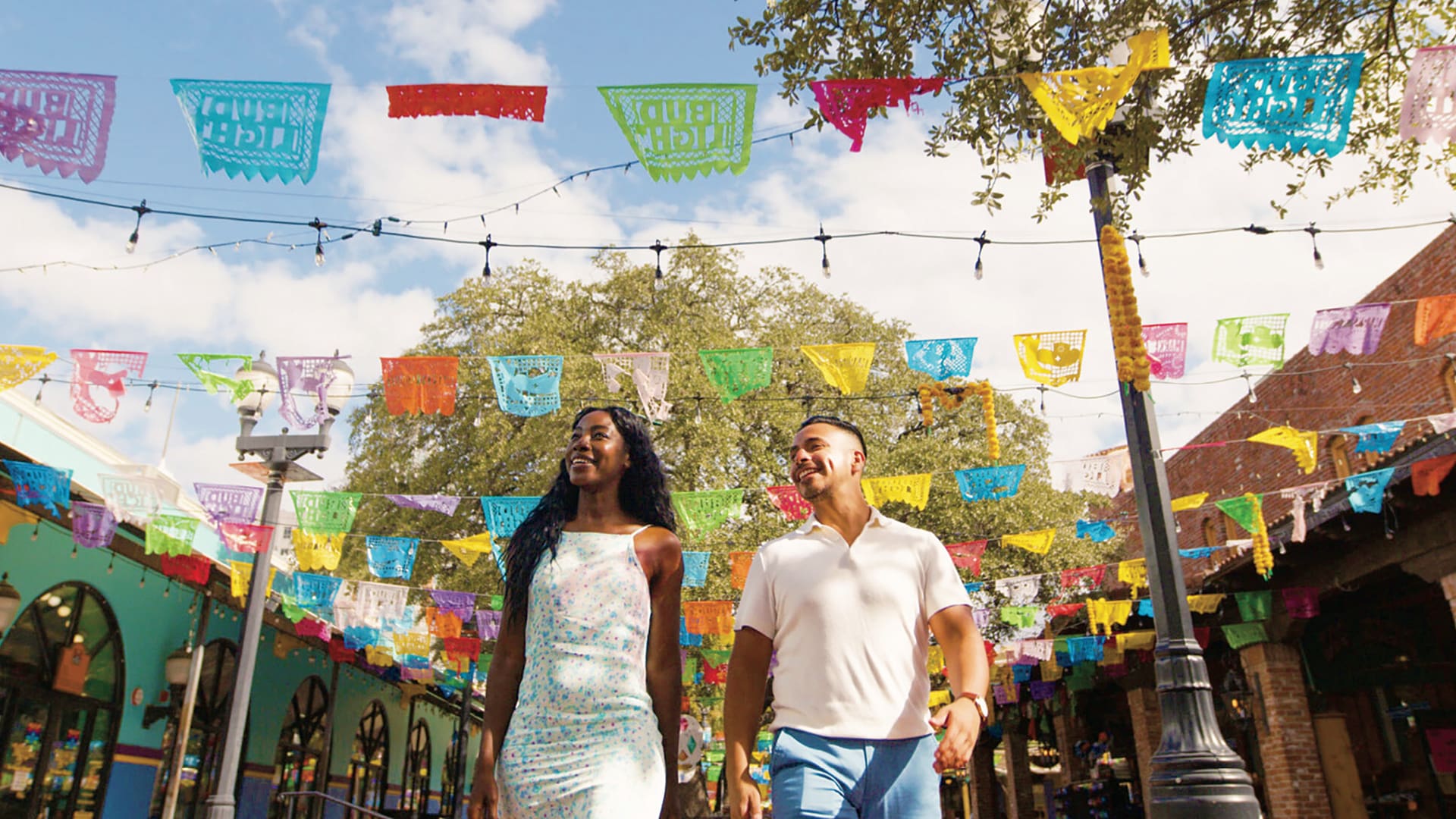
For a shorter stroll or scenic boat tour, visit the San Antonio River Walk. During the Day of the Dead River Parade, groups can see elaborately decorated floats with altars, catrinas and costumed riders, all celebrating life and loved ones.
“Hispanic Heritage Month is one of the most meaningful times to experience San Antonio because our culture is lived every day,” said Mario Bass, president and CEO of Visit San Antonio. “During Dieciséis de Septiembre weekend, the parade, El Grito and Fiestas Patrias showcase the music, traditions, cuisine and community that define our city. You’ll leave with more than memories; you’ll gain a genuine connection to one of America’s most authentic destinations.”


Brianne Sanchez
Brianne Sanchez is a full-time freelance writer, mom, and outdoor enthusiast based in Des Moines, Iowa. She loves to share stories of people making a positive impact in their communities and volunteers with her local library and arts and culture district in her free time.
You May Also Like


About Us

We're Going On Faith, America's leading experts on faith-based group travel. Find free resources for building a thriving church travel program here.
The Latest Issue
Stay Connected!
Get the Faith Travel Minute e-newsletter delivered every month.