


Arkansas, Naturally
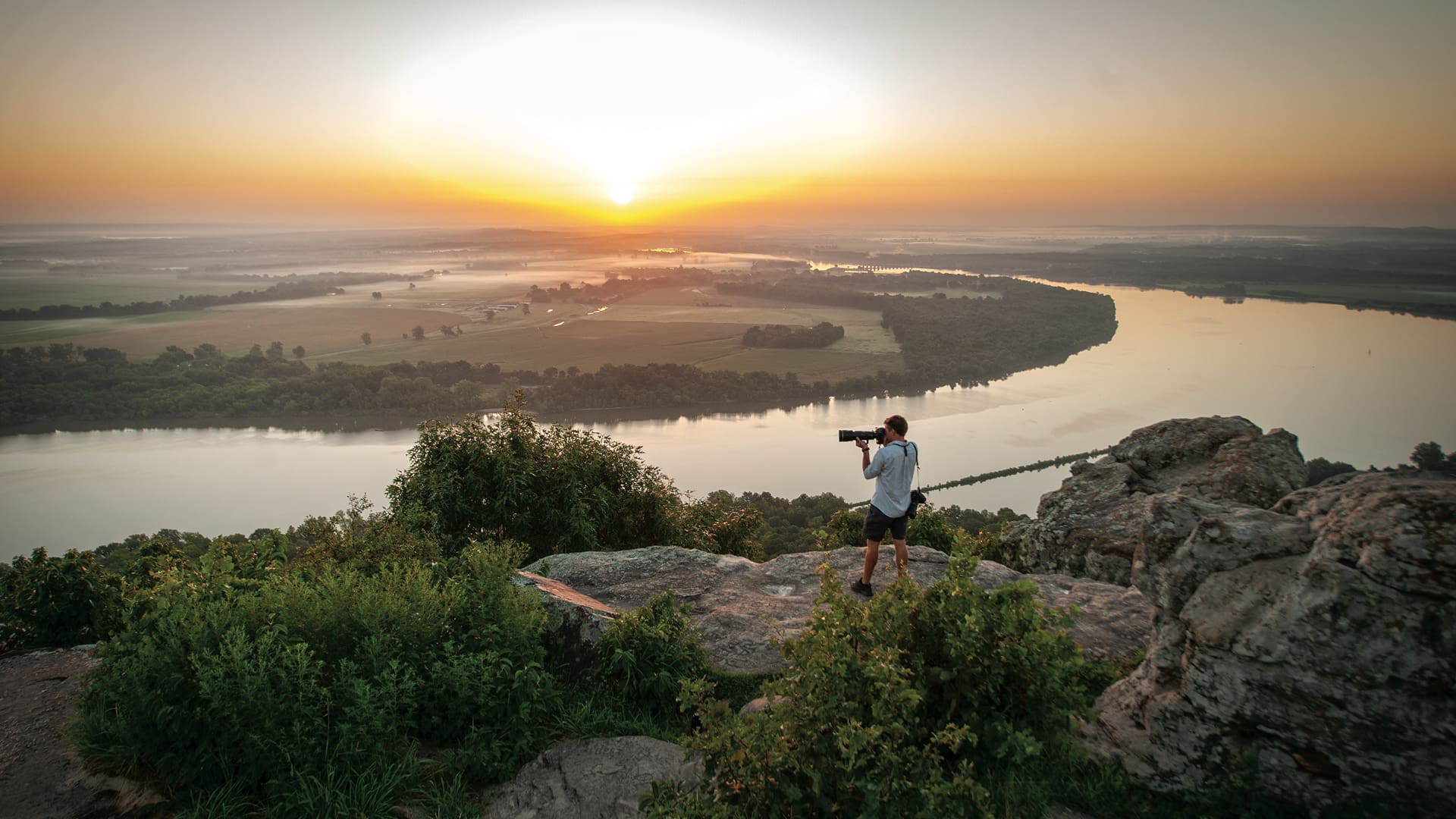
Courtesy Arkansas Department of Parks, Heritage and Tourism
Finding faith is easy when one looks outdoors — and “The Natural State” has plenty of places for faith travel groups to look.

With the rich forests of the Ouachita and Ozark mountains, several national forests, and an abundance of lakes, rivers and streams crisscrossing the landscape, Arkansas comes by its state nickname honestly. Whether groups are active, outdoorsy and ready for adventure or prefer to behold nature’s bounty in a more easygoing manner, there are plenty of natural wonders for them to experience.
Here are five breathtaking natural sites on an itinerary that will take groups from the rugged, forested lands of northern Arkansas to the low-lying floodplains of the southwestern portion of the state.
Blanchard Springs Caverns
Mountain View
In Arkansas, groups will find just as much beauty beneath the Earth’s surface as above. Blanchard Springs Caverns, located in Ozark-St. Francis National Forest, is one of northern Arkansas’ most distinct attractions. The three-level cave system is considered a living or active cave because it’s still being continually changed by mountain spring water that flows through it. The caverns are known for an impressive collection of stalactites, stalagmites and flowstones. The caves are in the process of becoming an official Arkansas State Park, and following renovations in 2027, it will have a grand reopening for the 2028 season.
Two out of three of the cave levels are open for guided tours from May through October. Tours begin with a short educational film about the caverns. Different tours offer options for guests with a range of mobility requirements and activity levels. The Dripstone Trail Tour is the less strenuous, half-mile option that lasts approximately 60 minutes, while the Discovery Trail Tour lasts approximately 90 minutes, involves nearly 700 stairs and is only open between Memorial Day and Labor Day. Groups should call ahead to reserve their tours.
While You’re Here: Also in Ozark-St. Francis National Forest and above the caverns, Mirror Lake Waterfall is a spring-fed, scenic waterfall that spills over from Mirror Lake. The waterfall is easily accessible via a walking trail, making it a perfect short hike and photo op. Not far from the national forest, the town of Mountain View is known as the Folk Music Capital of the World; visitors will frequently find folk musicians playing impromptu jam sessions in the town square. The nearby Ozark Folk Center State Park is a more formal way to explore the music and arts scene of the area.
Arkansas Grand Canyon
Jasper
The Arkansas Grand Canyon offers a different type of beauty than the rugged, red rock Grand Canyon in the Southwest. This so-called canyon is really a lush, green valley in the Ozark Mountains in the northwestern part of The Natural State. It’s Arkansas’ deepest valley, and the Little Buffalo River runs through it, which is why the area is sometimes called Buffalo River Canyon. There are several iconic overlooks, including one at Cliff House Inn, which serves home-cooked food and is famous for its “Company’s Comin’ Pie,” the state pie of Arkansas. Groups can also take in the gorgeous scenery with a drive along Arkansas Scenic Byway 7. The area is especially beautiful in autumn, when the foliage changes to red, orange and gold hues.
While You’re Here: The Ozarks are chock-full of natu ssral wonders, and Jasper is centrally located to most of them. Many of Arkansas’ most iconic lookouts and hikes are easily accessible from this small town, including Hawksbill Crag (aka Whitaker Point), accessible from a moderate trail that’s a great option for active, outdoorsy groups. There’s also the Buffalo National River, one of the last free-flowing, undammed rivers in the country, and the scenic Triple Falls, accessible from an easy, half-mile trail. In town, the Ozark Cafe is a great stop to refuel after a day of outdoor adventure.
Petit Jean State Park
Morrilton
Petit Jean State Park, pronounced “Petty Jean,” is Arkansas’ oldest state park and is said to be named for a French woman who disguised herself as a cabin boy to follow her lover to the New World in the 18th century. She was nicknamed “Little John” or “Petit Jean” by the other sailors, but when she reached Arkansas, she fell ill and died. Legend says she was buried at the top of a mountain, giving Petit Jean Mountain its name. The story may or may not be true, but there is a marked gravesite at Stout’s Point, a well-known lookout at the top of the mountain that offers visitors sweeping views of the Arkansas River.
Beyond the romantic legend, there is plenty for visitors to see and do in the beautiful park. Stout’s Point is easily accessible by vehicle and is a great spot for a photo of the Arkansas scenery below. Active groups will enjoy hiking to Cedar Falls, a 95-foot plunge waterfall, though there is also a short, wheelchair-accessible overlook route that offers a clear view of the falls from above. Lake Bailey, the park’s 100-acre man-made lake, is a great spot for on-the-water activities like pedal-boating and kayaking. The visitor center houses educational exhibits about the park’s geology and its history; in addition to being Arkansas’ first state park, it’s also a Trail of Tears National Historic Trail Site. Groups can dine at Mather Lodge to round out their visit to this Natural State classic.

While You’re Here: Just down the road from the park visitor center, groups will find the Museum of Automobiles, which is home to many antique and classic cars. Educational exhibits give details on the history of some of the featured cars.
Hot Springs National Park
Hot Springs
The thermal springs that give both the town of Hot Springs and Hot Springs National Park their names reach the Earth’s surface at about 143 degrees Fahrenheit and produce about one million gallons of water daily. These hot springs have drawn people to the area for millennia. They were first known as a place of healing among Indigenous peoples and then by the European settlers who claimed the territory in the 1500s. In 1832, Andrew Jackson declared the land should be preserved, which is why some argue that it predates Yellowstone as America’s first national park. Bathhouse Row, a row of Victorian-style bathhouses, was constructed beginning in the late 19th century; these bathhouses pumped thermal spring water through their facilities and marketed their healing properties to visitors, ensuring Hot Springs remained a wellness destination. Today, Hot Springs National Park is the only national park to be located within a town.
Groups can participate in ranger-led tours of Hot Springs, hike its 26 miles of trails, or visit Fordyce Bathhouse, which is home to the present-day visitor center and museum. Only a few of the historic bathhouses on Bathhouse Row retain their original function; the rest have been transformed into other locally operated businesses, including a hotel and even a brewery.
While You’re Here: Hot Springs is home to a number of other attractions, including some quirky options like The Gangster Museum of America, which details the town’s brushes with infamous figures like Al Capone. For a more peaceful outing, groups can head to the Garvan Woodland Gardens, botanical gardens that are home to the stunning Anthony Chapel.
Crater of Diamonds State Park
Murfreesboro
Usually, outdoor enthusiasts are told to leave no trace and avoid taking anything with them when they leave. But Crater of Diamonds State Park gives travelers the very unusual opportunity to keep whatever they find — and, as the park name suggests, visitors might just find diamonds. Located in Murfreesboro, a little town in southwestern Arkansas, the state park is the 37-acre surface of a volcanic crater, plowed to the dirt. Visitors to the park can search the crater on their own for rocks, minerals and gemstones (most notably diamonds). And they shouldn’t think it an exercise in futility; since it became a state park in 1972, over 37,000 diamonds have been found by visitors. That includes the 16.37-carat Amarillo Starlight, the largest diamond found by a park visitor, which was unearthed in 1975. Before the park became public land, the largest diamond unearthed in the country, a 40.23-carat diamond, was found in the park in the 1920s.
Groups can learn about these finds, as well as more recently unearthed diamonds and gemstones, at the park’s visitor center or the Diamond Discovery Center. And when groups are ready, they can dig for diamonds themselves. Park staff can assist with digging techniques, help with equipment rental and will provide a free evaluation of every stone collected. An estimated one to two diamonds are found in the park each day, so one among the group might just get lucky.
While You’re Here: Just outside of Murfreesboro, groups can keep digging at the Ka-Do-Ha Indian Village, an archaeological site based around excavated Caddo mounds that date back at least 1,000 years. During a self-guided tour, visitors can explore a field to look for arrowheads and crystals and persue a museum that contains some artifacts and exhibits about the village and the Indigenous people who once lived in the region.


Rachel Crick
Rachel Crick is the associate editor and project manager for The Group Travel Leader Inc. When she's not writing articles amidst her many plants, Rachel enjoys gardening, photography, and spending time with her family and cats, Misty and Jazz.
You May Also Like


About Us

We're Going On Faith, America's leading experts on faith-based group travel. Find free resources for building a thriving church travel program here.
The Latest Issue
Stay Connected!
Get the Faith Travel Minute e-newsletter delivered every month.